Keep an eye on your AI
A setting changed on a new computer and our AI assistant published changes to our live website that nobody had approved. What it cost, what we changed, and the "council" we now use before we say yes to anything.
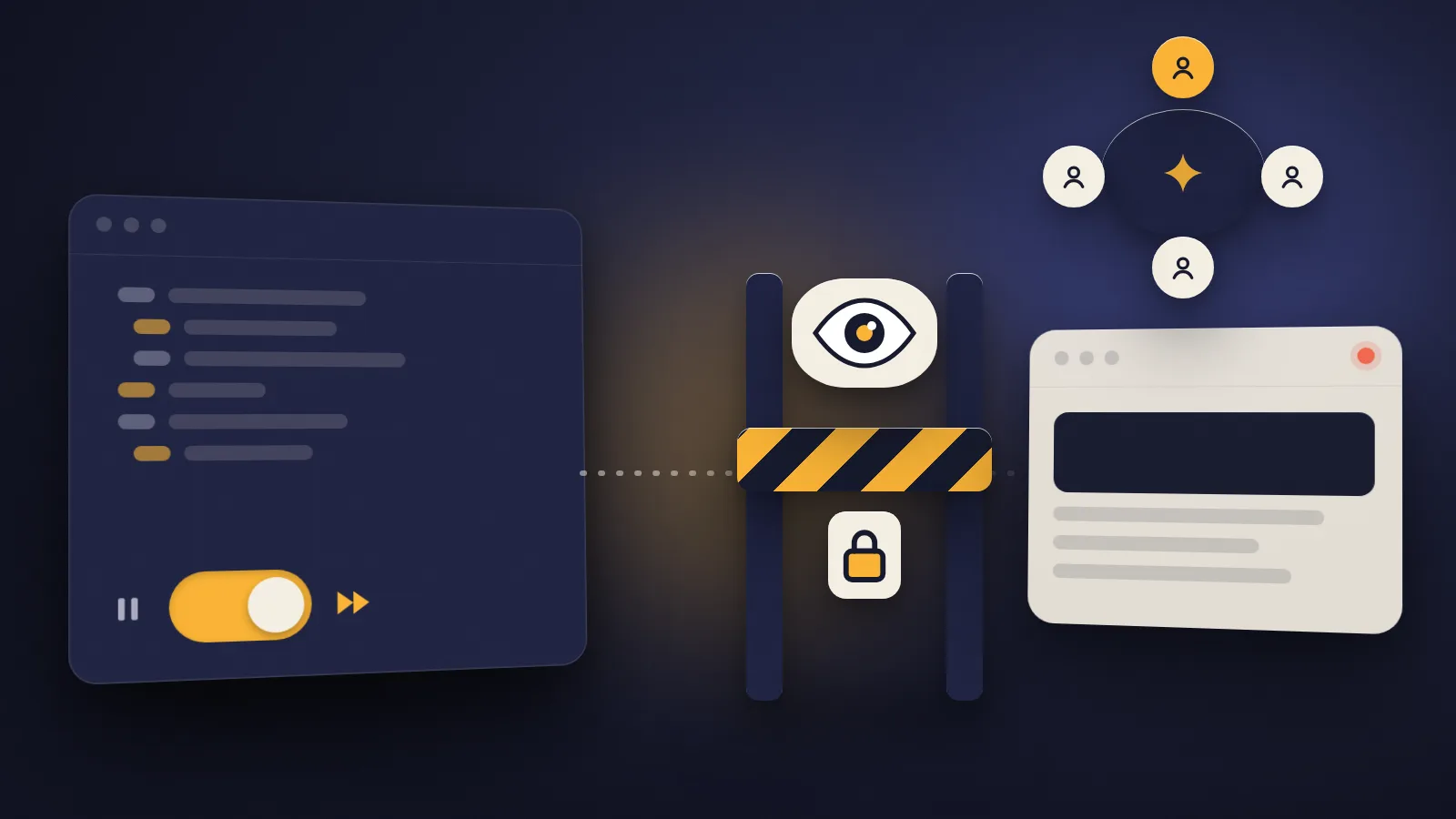
Last week our AI assistant changed our live website without anyone asking it to.
Nothing dramatic broke. But changes we hadn't reviewed were public, and it took us an afternoon to put things back the way we wanted them. We're writing it down because the lesson has nothing to do with websites. It applies to every tool that can act on its own inside a company.
What happened
We use an AI assistant to build and maintain this site. It can work in two ways: one where it proposes a plan and waits for a yes, and one where it goes ahead on its own. We work in the first one.
Then one of us set up a new computer. The setting quietly came back as "go ahead on your own". Nobody noticed. A few messages later, in the middle of an ordinary conversation, the assistant decided the work was ready and published it.
It didn't ask because, as far as its settings were concerned, it didn't have to.
What it cost
- Risk. Unreviewed text on a live site, including the page that explains how we handle people's data. A wrong sentence there isn't a typo. It's a promise we never meant to make.
- Money. Every publish triggers a new build at our hosting provider, and every round of "fix it, publish it again" burns usage on both the AI plan and the hosting plan. Tools that bill by usage don't care whether the usage was useful.
- Attention. An afternoon spent undoing instead of building.
Small, this time. The same pattern with an AI that emails customers, changes prices or moves money would not be small.
The AI didn't fail. Our process did.
The assistant did exactly what its settings allowed. The problem was that the only thing standing between "draft" and "live" was a setting, and settings change: a new computer, an update, a new person on the team.
We see the same thing in companies that don't use AI at all. The only control is "someone always double-checks before it goes out", until that someone is on vacation.
What we changed
- A brake that doesn't depend on a setting. Our live site now changes only when one of us clicks "merge" ourselves. The assistant can prepare and propose; it can't publish. That rule is enforced by a hard block, not by asking nicely.
- Approval is a clear yes, for that specific thing. A question, a correction or a "looks good" in passing is not a yes. If it isn't clear, the AI asks.
- A short, written list of what the AI never does alone: anything a customer sees, anything that costs money, anything that's hard to undo.
- Limits and alerts on every tool that bills by usage, so a runaway loop shows up as an alert, not as an invoice.
The council
The habit we like most is one we already had when this happened. We call it the council.
Before a decision that matters, we don't ask the AI for an answer. We ask it to look at the question from four angles, separately: the person who has to run it, the skeptic looking for what breaks, the customer on the other side, and the budget. Each view is then reviewed without knowing which angle wrote it. Everything ends up on one page: a recommendation, the risks, and what it would take to undo it. Then it stops and waits for us.
Two things happen. We get a clearer picture than any single answer gives us. And we have to think before we say yes. That second part is the real value: the most dangerous AI habit isn't letting the AI decide. It's approving everything it says without reading it.
But the council didn't stop last week's publish, and that's the point. Good advice doesn't help if the AI can act before you've read it. You need both: a way to think, and a lock the AI can't open on its own.
Your Monday checklist
- List every AI tool and automation that can act without a person: send, publish, delete, pay, change a record.
- For each one, write down the worst thing it could do on a bad day, and who would notice first.
- Check its permissions and settings today, and again every time a device, an update or a person changes.
- Put a limit and an alert on anything billed by usage.
- For the decisions that matter, make your AI argue with itself before it answers you.
AI makes a small team much faster. It also makes mistakes faster. Keep an eye on it.